
Edgefield County Criminal Court Records
A criminal court record is the case file the court maintains once a charge is filed or reaches the court. In Edgefield County, General Sessions is the Circuit Court criminal division for felony-level cases and serious criminal matters. The Clerk of Court keeps General Sessions records through the courthouse office. Magistrate Court and Municipal Court handle lower criminal, traffic, bond, preliminary-hearing, warrant, and summary matters, so a name search may need more than one court path.
The criminal court record is broader than a charge list. It may include the charging document, bond history, arraignment or appearance events, solicitor action, indictment, pleas, motions, hearings, trial events, verdict, disposition, sentence, probation terms, fines, restitution, appeals, and later sealing or expungement orders. A closer charge-focused path appears in Edgefield County arrest records and court charges, while this file focuses on the full criminal case record.
The South Carolina Judicial Branch is the state gateway for court records, rosters, rules, and forms.
That statewide court structure matters because Edgefield criminal records can begin in summary court and then move into Circuit Court depending on the charge.
Search Edgefield County Criminal Court Records
The official online starting point is the South Carolina Case Records Search page or the direct Edgefield Public Index. The state page identifies Edgefield County by Circuit Number 11 and County Number 19. The Public Index can show criminal case metadata, docket events, disposition, and public hearing information for General Sessions and summary-court matters where available.
- Open the state case-record search page or the direct Edgefield Public Index.
- Search by case number when known, because name-only searches can return similar people.
- Use court-agency, case-type, and date filters to separate General Sessions from Magistrate or Municipal matters.
- Open the case record and read the docket entries, charges, hearings, plea, disposition, and sentence fields.
- Request certified copies from the Edgefield County Clerk of Court or the summary court if the online record is not enough.
SLED CATCH is a separate criminal-history service and is not a complete court-file viewer. The SCDC inmate search is also separate; it applies to sentenced state-prison custody, not every Edgefield County criminal case.
Criminal Case Stages
Criminal docket entries make the most sense when read as a case path. A felony arrest may begin with the Sheriff's Office or a city police department, move through Bond Court or Magistrate Court for bond and preliminary matters, and then proceed to General Sessions if prosecuted there. Lower misdemeanor or traffic matters may remain in Magistrate or Municipal Court unless appealed, transferred, dismissed, or tied to a higher case.
Case flow: Charges Filed › Arraignment › Pretrial / Motions › Plea or Trial › Disposition › Sentencing
| Stage | What Happens |
|---|---|
| Charges Filed | The court receives the accusation through a warrant, complaint, indictment, or other charging process. |
| Arraignment | The defendant is advised of the charge and may enter a plea or receive scheduling orders. |
| Pretrial / Motions | Attorneys file motions, discovery issues arise, and hearings or continuances may be set. |
| Plea or Trial | The case may resolve by guilty plea, trial verdict, dismissal, or prosecution decision. |
| Disposition | The docket records the outcome for each charge or the case as a whole. |
| Sentencing | After conviction or plea, the record may show jail, prison, probation, fines, costs, restitution, or other terms. |
The state Circuit Court page describes Common Pleas and General Sessions jurisdiction.
General Sessions is the key Circuit Court division for felony-level Edgefield County criminal records.
What Edgefield County Criminal Records Show
A criminal case view should be read field by field, not by name alone. The disposition and sentence fields are the most important fields for outcome. Charges may be amended, reduced, dismissed, nolle prossed, or resolved by plea or trial. A pending charge is not a conviction, and a case can show several charges with different results.
| Field | What It Shows |
|---|---|
| Case Number | The court-assigned number for the criminal case. |
| Defendant | The person charged in the court case, subject to redaction rules. |
| Court Agency | General Sessions, Magistrate, Municipal, or related court level where public. |
| Charges | Offense descriptions, statutes, indictment or warrant details, and counts where shown. |
| Plea | The defendant's formal answer, such as guilty or not guilty, where recorded. |
| Docket Entries | Hearings, motions, orders, continuances, bond events, pleas, and sentencing activity. |
| Disposition | The outcome, such as guilty, not guilty, dismissed, nolle prossed, transferred, or closed. |
| Sentence | Jail, prison, probation, fines, costs, restitution, or other terms after conviction or plea. |
Charges vs. Convictions
Edgefield County criminal court records may show charges that did not end in conviction. A charge is an accusation filed in court. A conviction is the result of a guilty plea, guilty verdict, or other court finding of guilt. Public searches that stop at the charge line can misread the case, especially when one arrest produced several counts and only some were resolved against the defendant.
| Charge | Conviction | |
|---|---|---|
| Meaning | Formal accusation filed with the court. | Finding or plea of guilt. |
| Stage | Early or pending case stage. | Final or near-final outcome stage. |
| Record Clue | Appears in charge, count, warrant, complaint, or indictment fields. | Appears in disposition, plea, verdict, judgment, or sentence fields. |
| Public Meaning | Does not prove guilt. | Shows criminal liability unless later reversed, vacated, sealed, or expunged. |
The state Magistrate Court page describes the summary-court role in lower criminal, warrant, bond, preliminary-hearing, and traffic matters.
That lower-court channel explains why some Edgefield criminal records are found outside General Sessions.
Read Dispositions and Sentences
Disposition terms answer what happened to the charge or case. Dismissed means the charge or case ended by court action. Nolle prossed means the prosecution dropped or declined the charge. Guilty and not guilty reflect plea or trial outcomes. Transferred means the case moved to another court or process. Closed or disposed means the case has reached an administrative endpoint, but the docket should still be checked for appeal, probation, payment, or expungement entries.
Sentence entries should be read only after a conviction or plea. They can include jail, prison, probation, fines, court costs, restitution, or other terms. If a defendant is transferred to state prison after sentencing, SCDC data may show custody information, but the trial-court record remains the source for the case outcome and sentence order.
Sealed vs. Expunged Criminal Records
Sealing and expungement are not the same. A sealed record is closed from ordinary public view by law or court order. An expunged record is removed, sealed, or destroyed under the applicable criminal-record statutes so it should not appear in ordinary public search results. Dismissal alone does not always erase every agency record.
| Sealed | Expunged | |
|---|---|---|
| Visibility | Hidden from ordinary public access. | Removed from ordinary public records under the expungement order. |
| Authority | Law, court rule, or court order. | Statutory process and court or solicitor route. |
| Examples | Juvenile, adoption, mental-health, or protected filings. | Eligible dismissed, not-guilty, nolle prossed, or qualifying criminal matters. |
| Edgefield Route | Ask the record-holding court about access authority. | General Sessions and juvenile paths often go through the 11th Circuit Solicitor. |
Public Access to Edgefield Criminal Records
Criminal court records are generally public when no restriction applies, but South Carolina access rules are layered. South Carolina FOIA supports inspection and copying of public records subject to exemptions. Rule 610, SCACR governs access to judicial records. Rule 41.2, SCRCP requires redaction of personal identifiers, and the Public Index no longer displays home addresses for public cases as of January 1, 2026.
Key Statutes:
S.C. Code Section 17-1-40 covers eligible destruction or removal of dismissed, not-guilty, and nolle prossed criminal records.
S.C. Code Sections 17-22-910 to 17-22-950 cover solicitor-administered expungement routes and related procedures.
The state Family Court page shows why juvenile criminal-type matters do not follow ordinary public criminal docket access.
Juvenile case restrictions are a key reason a criminal name search may omit matters that exist in a protected court file.
Restricted Criminal Records in Edgefield County
Restricted criminal records include juvenile cases, sealed matters, expunged charges, protected victim information, active investigative material, and records closed by court order. Adoption and mental-health records are not criminal files, but they show the same access principle: a court file can exist without being open to ordinary public search.
Expungement requests in Edgefield County often involve the 11th Judicial Circuit Solicitor. The Solicitor's office handles General Sessions and Juvenile Court expungement requests and eligible Magistrate or Municipal convictions, while Magistrate and Municipal Courts process some dismissed, nolle prossed, or not-guilty matters from their own courts. Applicants may need certified dispositions and the correct packet.
The state Probate Court page is included in the manifest for this criminal-records page because it illustrates a separate court with protected mental-health and guardianship records.
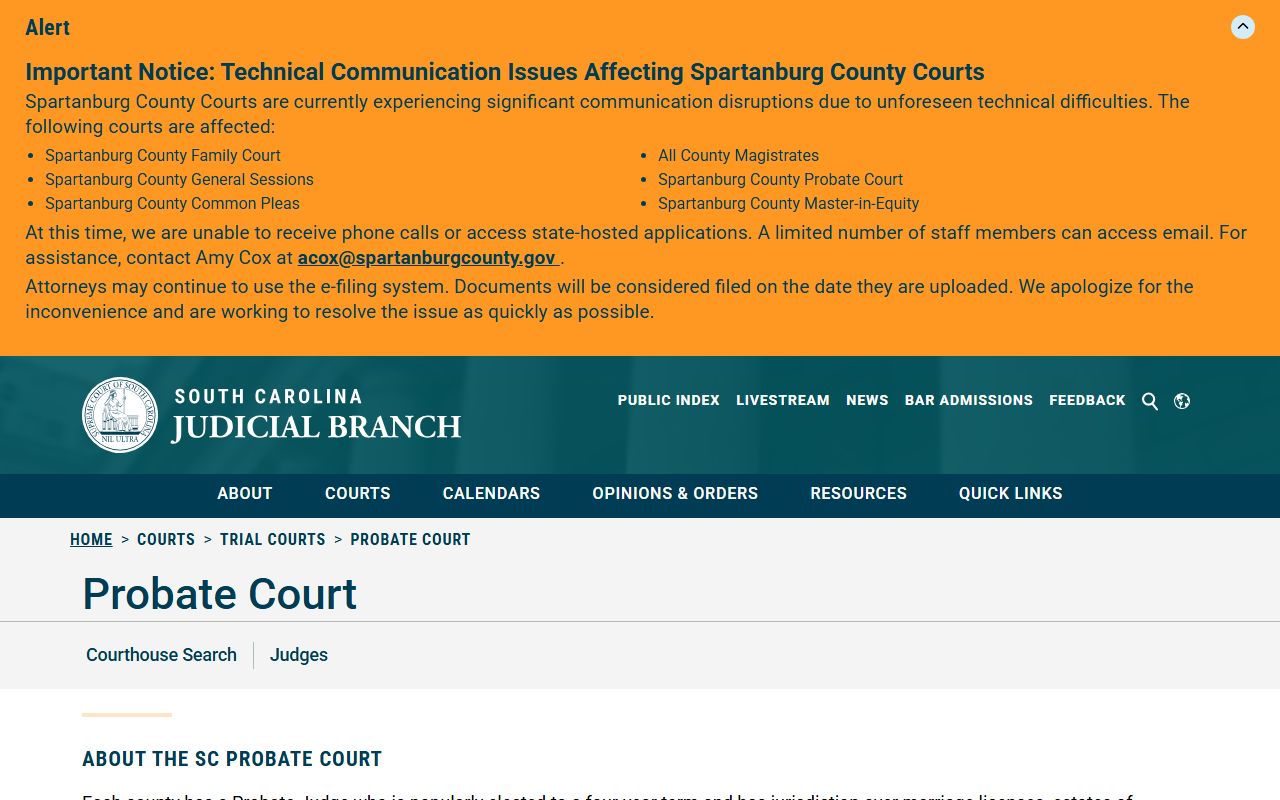
That distinction helps keep criminal case records separate from confidential probate and mental-health proceedings handled by another court.
Public Record Search
Sponsored Results